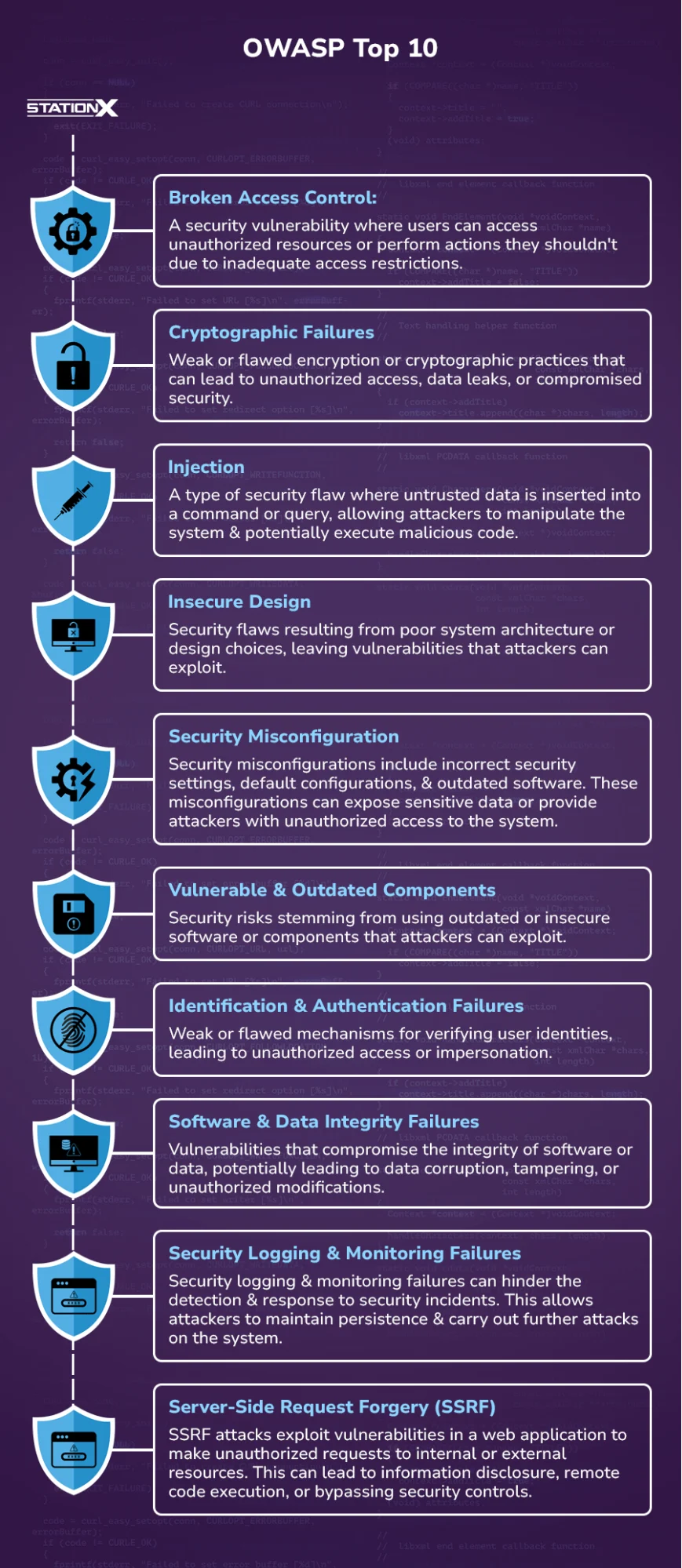
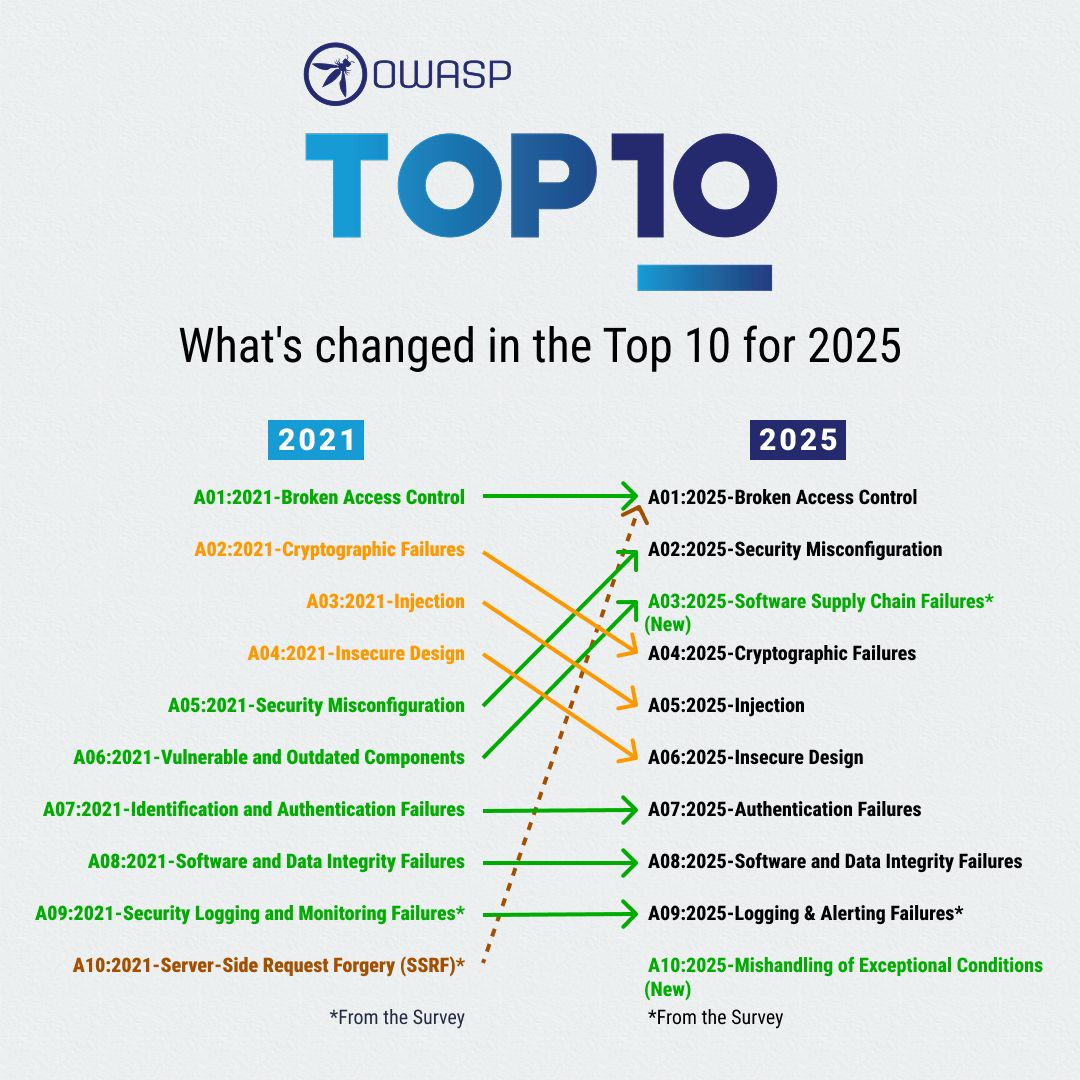
Test yourself
log4j dependency in code - A03
gmail login - password correct / mfa - A07
plaintext pwd, no salting - A04
logged PII - A09
exception stacktrace propagates to end user, no global exception handler - A02 , A10
acutator enabled in prod - A02
too much log - A09
missed rate limiting - A06, A07
missed patching - A02 - A03
github down due to not getting alerts for load at sidecars - A02, A09
You are mostly spot-on, but there are two subtle misclassifications based on the updated OWASP Top 10 taxonomy. Let’s do a quick audit of your list:
The Scorecard: What’s Correct vs. What Needs a Tweaking
-
log4j dependency in codeA03: Software Supply Chain Failures - Correct. Vulnerable third-party open-source libraries are the textbook definition of supply chain risk.
-
gmail login - password correct / mfaA07: Identification and Authentication Failures - Correct. Weaknesses in authenticating users or missing multi-factor controls fall squarely here.
-
plaintext pwd, no saltingA04: Cryptographic Failures - Correct. Insecure handling or lack of hashing for sensitive credentials is a cryptographic failure.
-
logged PIIA09: Security Logging and Monitoring Failures - Correct. Writing sensitive data (PII, credentials) to logs violates secure logging standards.
-
exception stacktrace propagates to end user, no global exception handlerA02 (You put A02, but it belongs to A10: Mishandling of Exceptional Conditions) - Correction: While bad error handling can feel like a misconfiguration, leaking raw stack traces and failing open during exceptional states is officially categorized under A10.
-
actuator enabled in prodA02: Security Misconfiguration - Correct. Leaving debug endpoints or default administrative features open in production is a classic misconfiguration.
-
too much logA09: Security Logging and Monitoring Failures - Correct. Excessive, noisy logging without actionable aggregation or filtering creates blind spots and storage hazards.
-
missed rate limitingA06 (You put A06, but it belongs to A07: Authentication Failures or A06: Insecure Design) - Correction: Missing rate-limiting on login/password reset endpoints is typically tracked under A07 (Authentication Failures) because it directly enables brute-force and credential stuffing attacks, or A06 (Insecure Design) if it’s an architectural omission.
-
missed patchingA02 (You put A02, but it belongs to A03: Software Supply Chain Failures or A02: Security Misconfiguration) - Correction: Failing to patch known vulnerabilities in third-party software packages and components is tightly coupled with A03 (Supply Chain) or outdated components management.
-
github down due to not getting alerts for load at sidecarsA02 (You put A02, but it belongs to A09: Security Logging and Monitoring Failures) - Correction: Missing monitoring metrics, telemetry alerts, and failing to detect infrastructure bottlenecks (like sidecar proxy load) is a classic A09 (Logging and Alerting Failure).
Quick Summary of Corrections:
-
Exception Stacktraces: Move from A02
A10 -
Missed Rate Limiting: Move from A06
A07 -
Missed Patching: Move from A02
A03 -
Sidecar Alerting Gaps: Move from A02
A09